What Does It Actually Mean to Feel Safe?

I'm going to ask you a question, and I want you to take a moment and sit with it.
Ready?
Do you feel safe right now?
Notice what thoughts immediately pop up. Notice any emotions that come to the surface. Try not to judge your reaction. Just get curious and notice what's there.
For me, I always think of my physical safety first.
Right now I'm sitting in my home. The doors are locked, but I also live in a safe neighborhood. My house is full of strong, capable men — my husband, my father-in-law, and my 21-year-old son.
So my first thought is: "Yes, of course I'm safe."
But safety goes so much deeper than our physical safety.
It isn't determined solely by our circumstances. It's shaped by our perception, our experiences, and the signals our nervous system is receiving.
And understanding that might be one of the most important things you ever learn about your nervous system.
Your Nervous System Is Always Asking One Question
Whether you're aware of it or not, your nervous system is constantly scanning your environment and your body for information.
It's looking for clues, signals, patterns, and evidence.
It's always asking one simple question: Am I safe?
But here's a very important distinction. Your nervous system isn't actually asking: "Am I objectively safe?"
It's really asking: "Do I perceive myself to be safe?"
Your nervous system responds less to reality itself and more to its interpretation of reality. And this is where a lot of us get stuck.
Long before you were consciously aware of it, your nervous system was gathering information. Facial expressions, tone of voice, body language, changes in routine, sensations in your body, whether you've eaten recently, how well you slept, and thousands of other pieces of information.
Just watch a baby react to the facial expressions of their parents. Before they can even understand words, they're reading tone of voice, facial expressions, and body language to determine whether they're safe.
The nervous system isn't worried about being accurate. It's not weighing data and reasoning on the evidence. Its sole focus is on keeping you alive, so it will always err on the side of caution.
The problem comes in when we "learn" that something is unsafe when it really isn't.
Safety Is About Perception
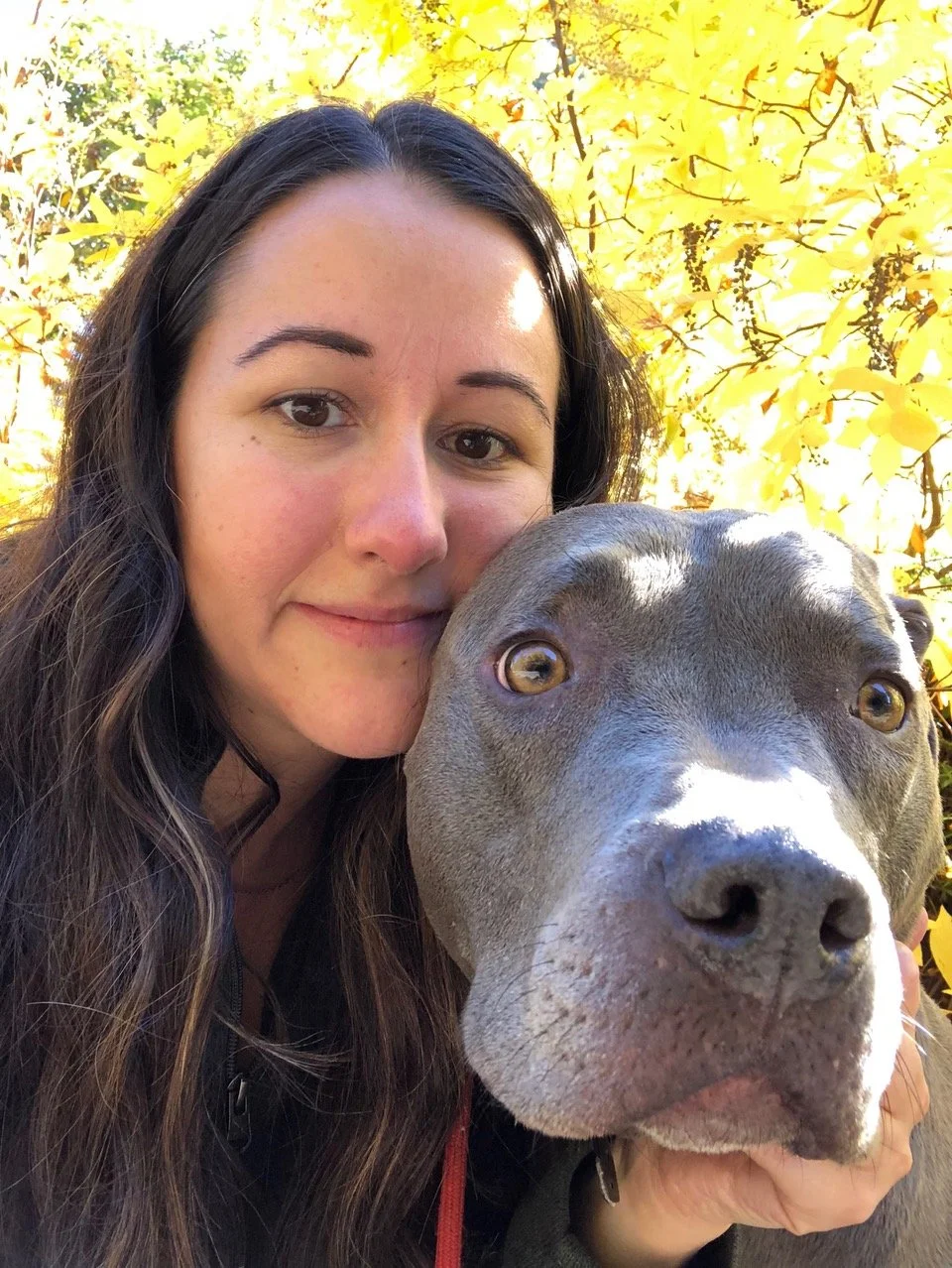
Imagine two people standing next to the same large dog. One person feels instantly comforted. The other is completely terrified. The dog's behavior is the exact same with both of them. They're both having the same experience, but their nervous systems are reacting very differently.
Why would this be?
As someone who grew up with a big dog and had one as an adult, I feel incredibly safe around them. If I see a large dog walking toward me, my brain immediately interprets that as friendly, familiar, and comforting.
But if you've been bitten by a big dog before, your nervous system may interpret that exact same dog as dangerous. You're immediately nervous and afraid.
This is why safety is so subjective.
It's shaped by our experiences, our memories, our beliefs, and the stories our nervous system has learned to tell about the world.
And to make things even more complicated, sometimes what we subconsciously consider "safe" are actually things that are detrimental to us in the long term.
When Maladaptation Feels Safe
At our core, we're all just trying to feel okay. We're trying to survive. So many of our thoughts and actions are just our subconscious mind doing what it knows how to do to make us feel safe.
This means that when you reach for that extra cookie, or scroll a little too long, or hit snooze too many times, that is you trying to feel safe in the only way you know how. Somewhere along the line, those actions were exactly what you needed.
Maybe as a child, the only comfort you could find was in food. Maybe distraction was the only option you had to escape from discomfort. Maybe you learned that staying small was the only way to avoid being hurt, and so reaching new goals and successes feels like too much attention, so you prevent yourself from achieving anything.
Our nervous system doesn't care whether or not we're happy. It doesn't care whether or not we're successful. It only cares that we stay alive. And so it does whatever it has learned to do to keep us "safe."
This is why this work is so much more than eliminating the things that make us feel uncomfortable or even threatened. It means retraining the nervous system to understand what real safety actually is.
Safety Is More Than Physical
When most people think about safety, they think about physical danger. And of course that matters. But the nervous system is paying attention to so much more than that.
Physical Safety
Your nervous system is scanning for physical threats, pain, injury, and anything it reads as dangerous. But even here, context shapes everything — for a professional athlete, pain and injury carry very different meaning than they do for most of us. What feels dangerous to one person is someone else's favorite pastime.
Internal Safety
What's happening inside your body is also creating feelings of safety or threat. Your body is constantly checking in: Have we eaten? Did we sleep? Is there enough here to function well? This is one of the reasons someone can have a calm and wonderful life and still feel anxious. There aren't any threats they can see around them. But if they're exhausted, undernourished, inflamed, hormonally imbalanced, or running on caffeine and stress, their body may not feel particularly safe internally.
Emotional Safety
We learn from the way we were raised whether or not it's safe to express our emotions. And for a lot of us .. it really wasn't.
Subconsciously, we're asking ourselves whether it's okay to make mistakes, to disappoint someone, to feel our emotions without being overwhelmed by them, to simply be imperfect. If the answer is no, we learned different ways to seek approval. We learned to focus on making everyone else happy. We learned to always be perfect so that we never disappoint anyone.
This is why things like resting, making mistakes, and just being human can feel so uncomfortable, and even threatening.
Relational Safety
So many people are physically safe but spend much of their lives feeling relationally unsafe. They're constantly monitoring other people's reactions, trying not to upset anyone, and carrying the weight of everyone else's expectations. That takes a tremendous amount of nervous system energy.
Their nervous system is always asking whether they can be themselves, express their needs, set a boundary, or disagree.. without losing the connection. If the answer is no, then we do what we need to do to stay feeling safe in the relationship .. even to our own detriment.
This is one reason people stay in relationships that aren't healthy for them. This is why people allow close friends and family to treat them poorly. Their nervous system feels most comfortable there — it feels safe, even though it really isn't.
Future Safety
This one tends to run in the background, so we don't always notice it.
Your nervous system likes to predict what's coming next. Can I handle it? Am I prepared? What's around the corner? This is why uncertainty can feel so stressful. This is also why we often find ourselves in that What If thinking — we feel like we need to predict all the ways things might go wrong so we can have a solution ready, just in case.
The nervous system thrives on predictability. But since none of us can actually predict the future, we end up doing what we can to feel like we're still in control of whatever comes. And in the meantime, we are miserable, always waiting for that next shoe to drop.
These are just some of the ways we are striving for safety. This is part of why nervous system work can take time — it often means rewiring these responses so that our nervous system can learn a new baseline of what is actually safe.
What My Panic Attacks Taught Me About Safety
I learned this lesson firsthand through panic attacks, of all things.
My panic attacks would always start the same way. Seemingly out of nowhere, my heart would start racing. My chest would tighten. My body would flood with sensations that felt overwhelming and honestly terrifying. Every time this would happen, I honestly thought I was having a heart attack and dying. It took a couple of years just to figure out that it was a panic attack.
As soon as I would have these physical sensations .. I'd also be filled with fear because I didn't understand what was happening. And the fear would only cause even more anxiety. And the anxiety would make the physical sensations that much worse.
It became a loop that I couldn't seem to escape from.
But what eventually changed everything was not stopping the sensations that triggered that response .. it was understanding what was happening in the first place.
I learned that all those sensations I was experiencing was really just a surge of stress hormones — adrenaline, specifically.
When we have a dump of adrenaline, it raises your heart rate. It changes how you breathe. It impacts things like your muscles and your eyesight because it's trying to help you to fight or flee.
When you hear those crazy stories of moms lifting cars off of their children, that's adrenaline. It plays a necessary role when we really need it.
In my case, it wasn't a heart attack. It wasn't because something was broken. It was a misunderstanding of what was needed after a perceived threat.
Once I learned this, the sensations were suddenly not so scary. I eventually was able to address what was causing these adrenaline dumps, but what made the panic attacks go away was taking away the fear that was there when it would happen.
Once I finally understood what was happening, I knew exactly what would come next, and I knew that I was going to be okay. The sensations hadn't changed. The meaning I attached to them had.
It was still uncomfortable to be filled with adrenaline out of nowhere, but it was no longer unsafe.
Safety and Comfort Are Not the Same Thing
This was another lesson I had to learn.
For many people who grew up feeling unsafe — whether physically or emotionally — they often spend the rest of their lives avoiding discomfort because they assume discomfort means something is wrong.
But that ends up being incredibly limiting because growth is often uncomfortable. Setting boundaries is uncomfortable. Trying something new is uncomfortable. Being vulnerable is uncomfortable. Asking for help is uncomfortable.
None of those things are inherently unsafe. But if you never developed a stable sense of inner safety, then all the fire alarms will be going off in your nervous system when you attempt any of them.
Some of the safest decisions you will ever make will feel incredibly uncomfortable at first. This is why it's so important to retrain the nervous system to learn that uncomfortable is okay.
But we have to consciously believe that it's true first.
What Safety Actually Is
If I had to define safety in one sentence, it would be this:
Safety is the belief that you can handle what is happening right now, or that you can get the support you need if you can't.
That's very different from trying to create a life where nothing difficult ever happens. Because that's impossible.
Instead, we help the nervous system develop trust.
That means developing trust in your body. Trust in your ability to respond. Trust that discomfort doesn't automatically mean danger. Trust that uncertainty doesn't automatically mean catastrophe. And trust that you're more resilient than you think.
This is why nervous system regulation is about so much more than simply calming down.
It's why supplements don't always work. It's why mindset work sometimes falls flat. It's why you can know logically that everything is okay and still feel anxious. It's why someone can be safe, loved, supported, and successful and still feel stuck in survival mode.
If the nervous system doesn't perceive safety, it will continue responding as though danger is present.
And until that changes, healing becomes much harder.
Why Everything I Teach Starts With Safety
This is exactly why safety is the foundation of everything I teach — and the starting point of my SAFE Framework. Because a nervous system that feels threatened will always prioritize protection over healing. Before we focus on anything else, we first have to help the nervous system experience safety.
You don't need a perfect life in order to feel safe. You don't need to eliminate all the triggers around you in order to feel okay.
Safety is a learned response. And just because you've learned one version of it doesn't mean it's set in stone.
The nervous system is incredibly adaptable. It wants to learn. We just have to teach it.
So maybe the question shouldn't be:
"Am I safe?"
Maybe it's:
"What is my nervous system perceiving right now?"
Because the path back to regulation isn't changing every circumstance in our lives.
It's helping our nervous system recognize that we have more support, more resources, and more capacity than it realizes.
And that shift in perception can change everything.