When Hormones Don’t Feel Like You
I think of myself as a very calm person.
I’m good in emergencies because I stay centered and can take logical action.
I rarely get angry. When someone does something offensive or hurtful, my first reaction is usually confusion more than anything else.
I’ve spent over 20 years as a Massage Therapist helping other people calm their nervous systems. I can get my body into a relaxed state very easily.
Which is exactly why it catches me so off guard when my hormones take over.
I don’t know how many times I’ve told my husband that I wish he could experience being a woman for just one cycle — just so he could understand the contrast. How high and expansive you can feel around ovulation… and then how your world can start to implode once you move into the luteal phase.
The emotional shift surprises me every single time.
Because when it hits, it feels enormous. Like I might explode over the tiniest thing.
Let me give you an example.
The Moment I Knew This Wasn’t “Me”
My father-in-law has lived with us for over 20 years, and I genuinely love having him here. I love that my son grew up with his grandpa in the house. He’s helpful, thoughtful, and incredibly sweet at times.
The last time I was sick, he checked on me constantly… more than my husband or son did.
And he’s also like having a second husband in the house sometimes — because there’s a second man doing little things that quietly drive me insane.
If you follow me on Instagram, you already know about the butter dish feud.

He insists on keeping butter out at all times. I insist on having a clean butter dish. He never cleans it before putting a new stick on. So I’m constantly trying to beat him to adding that new stick of butter — and it’s a battle he is completely unaware is happening.
But yesterday, I had a rage erupt in me that took me by surprise.
I had just done a load of laundry — delicates, cotton, and wool pieces that absolutely should not go in the dryer. I intentionally waited until I got home to start it because I didn’t want him trying to “be helpful” and throw it all in the dryer. I’ve asked him many times not to do that, but it never quite sticks.
A couple hours later, I went to check the laundry.
Everything was in the dryer. Almost done.
Multiple items had shrunk.
They were salvageable — but still.
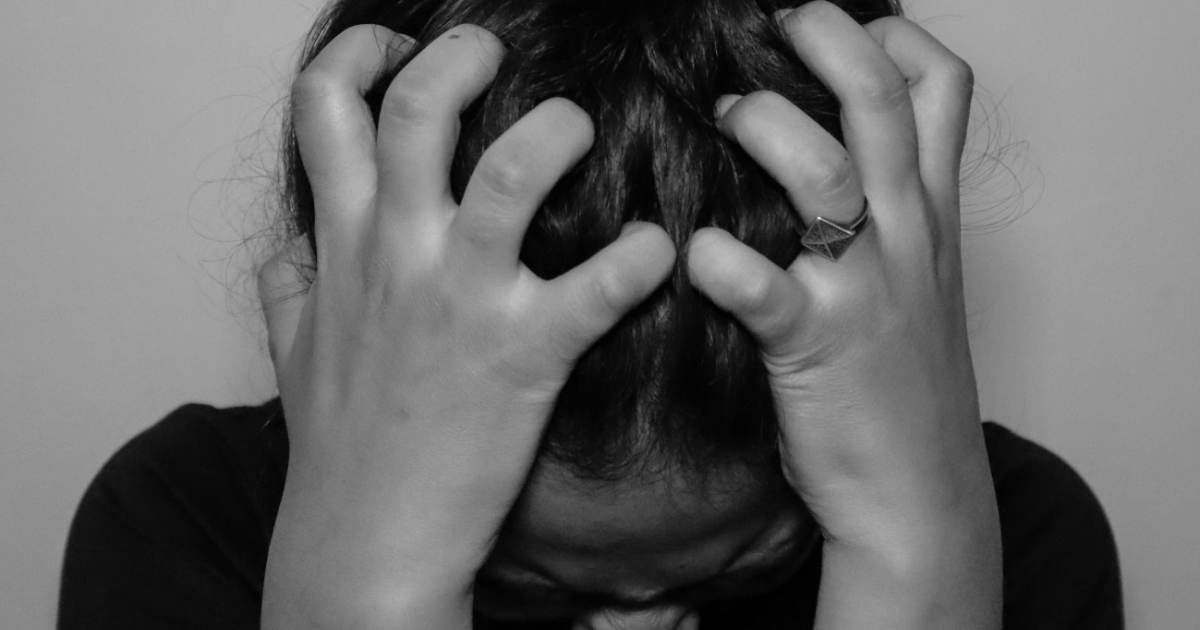
I felt like my head was going to explode. I was so angry.
It was the kind of rage that made my heart race. The kind that surprised me with its intensity. My inner Latina came out so fast I wished I spoke fluent Spanish just so I could properly express it.
I wanted to scream. I wanted to retaliate. I even had the fleeting thought of dumping bleach into his load of laundry just so he’d know how it felt. (That inner Latina is scary sometimes)
And then I stopped, thankfully before I said or did anything.
Because this wasn’t me.
I’m not reactive like that. I don’t fly off the handle.
And that’s when it hit me — I’m about to start my cycle.
This wasn’t just me losing control.
This was hormonal.
Why Moments Like This Leave So Many Women Confused
I’ve always had relatively balanced cycles. Compared to many women I know, I’ve had it easy.
Yes, I notice changes in my mood and energy, but I’ve watched so many friends struggle deeply — especially now, as so many of us are entering the dreaded perimenopause.
What strikes me isn’t just how intense these shifts can feel — it’s how little context most of us have for understanding them.
We’re taught how to track our periods to avoid pregnancy.
We’re taught what’s “normal” to tolerate.
But we’re rarely taught how our bodies actually function — or how deeply interconnected everything is.
There’s a male creator on TikTok who’s gained traction by showing his shock when learning how often women are left behind in science and medicine. One example he shares is the staggering difference in funding for male-pattern baldness compared to conditions like PMDD. Or how It was only in the last few years that tampon testing began using actual bodily fluids instead of just water. His comment section is full of women who feel seen and validated.
But still, too many women are left in the dark when it comes to their own body.
When we go to the doctor we don’t even know what questions to ask because so few of us are educated on how our cycle even works.
So when we suddenly feel overwhelmed, reactive, anxious, depressed, or unlike ourselves, the assumption becomes: Something is wrong with me.
And when we go looking for answers, the solutions often feel just as confusing.
The “Fix” That Doesn’t Always Fix Anything
So many women are told some version of:
“This is just part of being a woman.”
“That’s anxiety.”
“Here’s the pill.”
“Here’s an antidepressant.”
And while those tools absolutely have their place, they often skip over a much bigger conversation.
Hormones don’t exist in isolation. They respond to signals from the body all day, every day — stress, sleep, blood sugar, inflammation, emotional load, and nervous system state.
When your body is under chronic stress, hormone signaling adapts to help you survive.
That doesn’t mean your body is wrong somehow.
It means it’s responding.
The body is incredibly intelligent. We assume that when our body is doing something we don’t like, it’s because something is broken. But often that “brokenness” is simply a symptom of it needing more support.
This is true of how our hormones function too. They’re not just a symptom to try and stop .. but we need to first understand why they’re firing off (or not firing off) in the first place.
And the first piece to understand is the nervous system connection.
The Nervous System Piece No One Talks About
It’s easy to fall down the rabbit hole of trying to understand our ideal levels of hormones and what we should take or do to support each one.
But this is where the hormone conversation usually goes sideways — because we tend to isolate hormones into categories instead of understanding how all hormone systems are coordinated upstream.
Hormones are messengers. They don’t make independent decisions.
Those instructions come from the brain — specifically from the communication loop between the hypothalamus and the pituitary gland, which act as the body’s command center.
The hypothalamus is constantly scanning your internal and external environment, asking one core question:
Am I safe?
When the answer is yes, the body can prioritize things like:
Reproduction
Repair
Emotional regulation
Stable energy
But when the answer is no — whether due to emotional stress, inflammation, blood sugar swings, poor sleep, unresolved trauma, or simply doing too much for too long — the hypothalamus shifts into protection mode.
That shift changes the signals it sends to the pituitary. And that changes hormone messaging downstream.
This is why two people with similar hormone levels can feel completely different in their bodies.
This signaling loop doesn’t just influence reproductive hormones — it regulates cortisol, thyroid hormones, insulin signaling, growth hormone, and many of the chemical messengers that affect mood, energy, metabolism, and sleep.
Regardless of which group of hormones we’re looking at in the body, they’re all responding to the same upstream signals about safety, energy availability, and stress.
This is why focusing on hormones without addressing the nervous system can feel frustrating and often, just doesn’t work.
You’re trying to change the messengers without changing the message.
I experienced this first hand. For years my thyroid levels were low. I had all the symptoms of PCOS. And I was given separate things to try to address both. What I tried helped a little, but the effect was simply managing my symptoms, not addressing them. Because when I deviated from my protocol for even a day or two all my symptoms came flooding back.
And then I started to finally address my anxiety, not knowing it was going to affect my hormones as well. Once I learned to regulate my nervous system and I wasn’t stuck in survival mode anymore; my thyroid naturally balanced out. My PCOS symptoms went away. Along with a whole host of other symptoms I had no idea were tied back to my nervous system.
When the nervous system is dysregulated, there are so many downstream effects. But hormones are a big one that too few recognize.
Why Perimenopause Can Feel Like Everything Gets Louder
Perimenopause is often explained as a time when hormones become “wonky” — and while fluctuations are real, that explanation doesn’t tell the whole story.
Yes, it’s natural for our reproductive hormones to become irregular as we near menopause. And with that comes very specific symptoms. But the intensity at which you experience those symptoms is largely due to your overall health and stress capacity.
What’s often happening underneath the surface is that the body’s systems are less resilient than they used to be.
By midlife, many women are dealing with:
A liver that’s overburdened by years of toxin exposure and stress hormones
A gut that’s inflamed, sluggish, or imbalanced
Blood sugar instability
A nervous system that’s been running in overdrive for decades
When these systems are bogged down, hormone metabolism and clearance slow. Estrogen doesn’t move through the body as efficiently. Stress hormones like cortisol stay elevated longer than they should. Thyroid signaling can begin to shift.
These changes don’t happen in isolation.
They influence how reproductive hormones are felt in the body, which is why symptoms can seem emotional, physical, and cognitive all at once.
So what we’re often told is “just hormones” is frequently the cumulative effect of:
Chronic stress
Inflammation
Poor detox capacity
Nervous system overload
It’s not that your body is suddenly failing you. The margin for error is smaller. And the system that used to compensate quietly is now asking for support.
Just like if you stopped working out and started living a sedentary lifestyle, you wouldn’t see the effects of lost muscle immediately. But the results would show up slowly over time.
Our body is incredibly resilient, but we often have a lot of the same symptoms around the same ages, not because it’s “normal”, but because that’s about how long it takes for the effects of our lifestyle choices and lack of stress management to show up.
It’s the same with hormones. Some of it is very normal, but so much of it is more in our control than we might realize.
What Actually Helps
Awareness is always the first step. And to truly be aware, you have to first understand what your body is trying to do in the first place.
Understanding what’s happening creates relief and self-compassion. Then real change happens when that awareness is paired with practical, supportive action.
Instead of only zero-ing in on ideal hormone levels, we first focus on supporting the systems that influence them in the first place.
That means learning how to:
Help the nervous system shift out of chronic threat
Support the liver so hormones can be metabolized and cleared
Reduce inflammatory load in the gut
Stabilize blood sugar so the brain isn’t constantly on edge
Work with your body instead of pushing through it
This is where a lot of women get stuck. But the good news is that these are all the same things we do for our health in general.
Why We’re Focusing on Hormones as a System Inside Rooted + Rising
This is exactly why we’re focusing on hormones as a whole system inside Rooted + Rising this month.
While reproductive hormones are part of the conversation, we’re also looking at stress hormones, metabolic hormones, thyroid signaling, and the nervous system patterns that influence them all.
Inside the membership, we zoom out — and then move step by step:
How the nervous system drives hormone signaling
Why symptoms show up the way they do
Which systems need support first
And how to create real change without shame, extremes, or urgency
There’s a deeper masterclass where we walk through the how, and a supportive group space where this information can actually be integrated into daily life.
When we stop trying to manage one hormone — or even one hormone group — and instead recognize that there’s a single system regulating them all, everything changes.
Symptoms stop feeling random. Your body stops feeling like it’s betraying you. And you begin to rebuild trust in yourself.
If this conversation resonates with you and you want to explore it more deeply, you’re invited to join us inside Rooted + Rising this month.