Your Body Is Listening
The other day I caught myself in a mode of thought that goes against so much of what I believe.
I’ve had a few different minor injuries lately. The stupid kind where you stand up and suddenly your back goes out, or you sleep wrong and now you can’t turn your head. Or you try a new workout and it completely messes up your shoulder.
The kind of injuries that just make you feel old.
And that was the thought I caught myself in:“Well… I am getting older. I probably can’t do as much. I’m probably just more prone to injury now.”
And while there is some truth to that, it’s not the kind of mindset I want to have.
Yes, recovery can take longer as we get older. Our bodies do change. But I’ve also seen plenty of people in their 60s, 70s, and beyond build strong, capable, resilient bodies. I’ve watched people completely transform how they move and feel… simply by changing what they were doing.
The body is incredibly adaptable. As long as we have breath in our lungs, we have the ability to build stronger cells and a stronger body.
I feel really passionate about that. Which is why it caught me off guard to notice these thoughts creeping in.
But even more than that, I realized those thoughts were starting to shape what I was doing.
I found myself worrying about the backpacking trip we do every summer: Will I be strong enough this year? At what point does that trip become too much?
And I started noticing other thoughts, too:“My body just doesn’t recover easily.” “I don’t build muscle very well.” “I need to take it easy because I wear out so quickly.”
Logically, I don’t actually believe those things.But when I look at my actions — and how I’ve been feeling — they start to feel true. And that’s what made me pause and ask a different question:
How much of what I’ve been experiencing with my body is actually physical… and how much of it is my body responding to what I believe about myself?
I know that question can sound a little woo-woo, but it sent me down a bit of a rabbit hole that only confirmed what I was starting to suspect: Belief has incredible power.
Why I Stopped Serving Fish
I’ve personally seen how belief can have a massive impact on how you feel. I’m going to pick on my husband for a minute.
I stopped cooking fish for dinner several years ago because every time I did, Jesse would complain. He enjoyed eating it, he always said it tasted amazing, but it just never made him feel full.
He’s very much a meat eater. He feels his best when he eats a lot of meat and a higher protein diet. And in his mind, fish was an inferior protein. It just didn’t make him feel as satiated. He was hungry again in an hour because he was convinced it wasn’t enough food.
And then something interesting happened.
In prepping for our backpacking trip last year, he was buying some pre-packaged chicken and tuna salads for our lunches, and he noticed that the tuna packages had more protein than the chicken ones. Same ounces of food, but the tuna was more protein.
This made him look up how much protein is actually in tuna and other fish, and he learned that it’s pretty comparable to other meats.
Fish, as it turns out, is a great source of protein.
Once he had that knowledge, he stopped complaining when I’d cook fish for dinner. It suddenly made him feel full and satisfied. He wasn’t hungry an hour afterward anymore.
Nothing changed in how I cooked it or how much he ate. The only thing that changed was his belief in how it would make him feel.
When Belief Meets Biology
There’s an amazing study that explains why this likely happened.
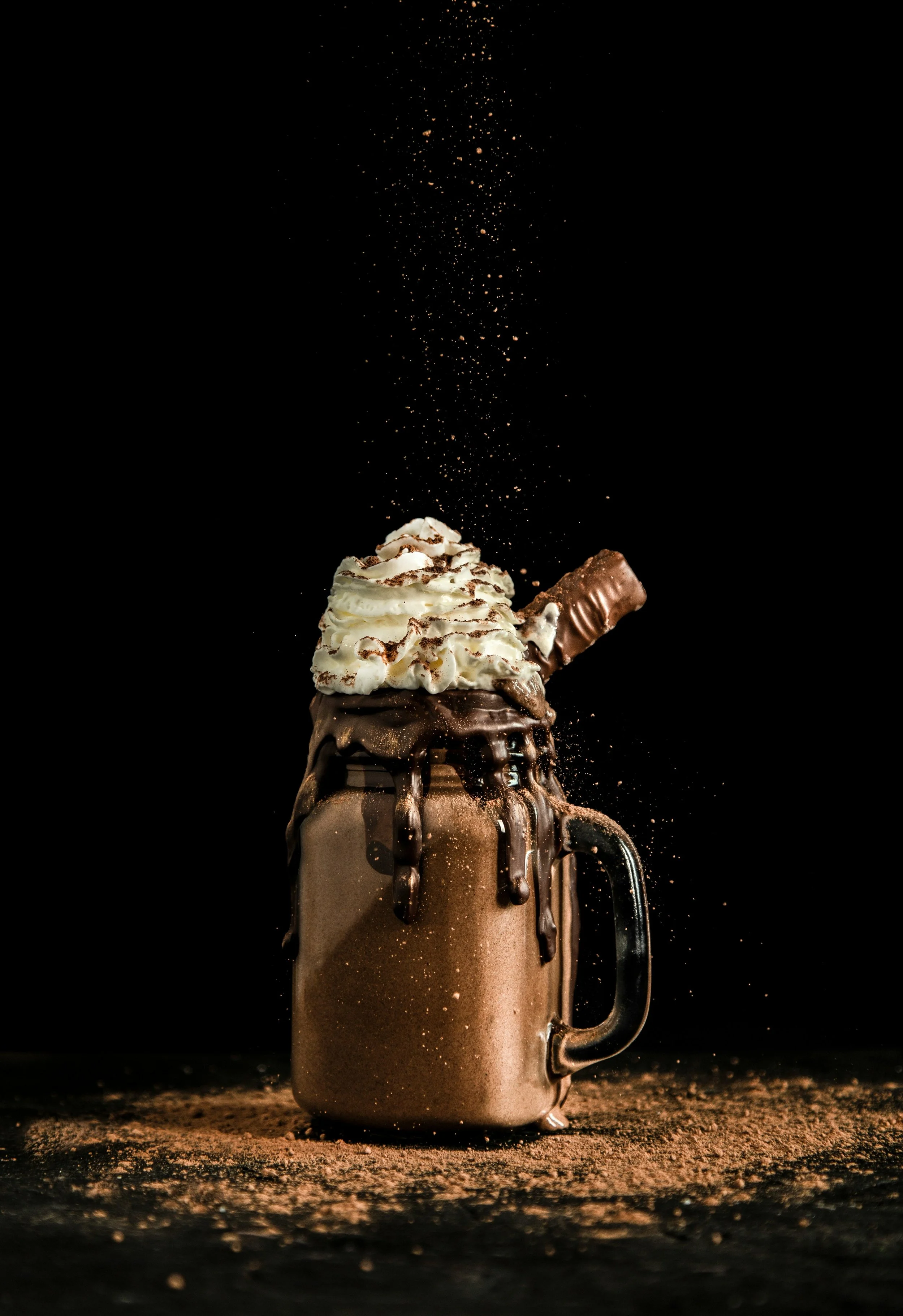
They looked at this exact phenomena: your belief can actually change your biology. Researchers gave two groups of participants a milkshake on two separate occasions.
One group was given a shake that was labeled as having 620 calories and was described as a rich, decadent, and high-fat treat. The other group was given the exact same milkshake, but theirs was labeled as having 140 calories and was described as light, low-fat, and guilt-free.
The researchers measured their levels of ghrelin (a hormone that signals hunger and drops when you feel full) before and after all the participants drank the shake. And the results were crazy:
The group that thought they had a rich, indulgent shake had a significant drop in their ghrelin levels. Their bodies responded as if they had eaten something really filling.
The other group who thought they drank a more sensible, low calorie shake? Their ghrelin levels dropped a lot less. Their bodies responded as if they hadn’t eaten enough.
It was the exact same shake! But the two groups had very different responses, all because of what they believed about what they consumed.
This is likely exactly what happened with Jesse and the fish. It wasn’t just “in his head” that he felt hungry after eating fish. His body reacted as if it wasn’t enough food because he believed it wasn’t.
But belief can have an impact on much more than just our digestion.
It’s Not Just Food
There’s another study I came across that had an even bigger impact on me and how I had been thinking about my own body.
In this experiment done in 1979, a group of men in their late 70s and early 80s were brought to a retreat that was designed to feel like it was set 20 years in the past. The researchers scattered around the rooms magazines and newspapers from 20 years before, 1959. They only played music and tv shows from that time. Everything was set up exactly as if they were truly living in the past.
But here was the key: the participants were told to live as if it really was 1959. They encouraged them to have conversations as if that was their present tense. They were encouraged to act and picture themselves as if they really were 20 years younger.
After only 5 days, something remarkable happened: The participants' posture got better. Their grip strength improved. They had more flexibility. Their vision and hearing improved. And they even had improvements in their memory and cognition.
They took before and after photos and showed them to others, and the observers rated them as looking a couple years younger in the after photos.
After only 5 days!
There was another small group that were taken to a similar retreat but they were not told to embody the experience. They just reflected on that time period, and that group didn’t have the same results.
So it wasn’t just being put in that environment.The results came from their belief. They believed they were 20 years younger, so their body started responding as if it really was.
Same Body, Different Outcomes
Now here’s where things get even crazier.
I started looking up accounts of people who have Dissociative Identity Disorder (previously known as Multiple Personalities).
These individuals can have vastly different biological markers when they are in a different identity state. In some documented cases, different identity states can show measurable differences in things like heart rate, stress response, and even how the body reacts to certain stimuli.
A shift in identity showed changes in things like EEG patterns, stress response, or muscle tension and coordination.
Same body, but very different physiological results — all because the identity changed. This shows us that the brain can organize the body differently depending on the state or identity it believes it’s in.
So What Does This Mean For You And Me?
It’s surprising to me that this phenomenon isn’t talked about more often. Because the pattern is clear: your belief can truly alter your results.
Of course, there are limits. You can’t jump off a cliff and believe you can fly. You can’t believe your way to being able to breathe under water. Our bodies have specific needs and specific limits.
But our beliefs around those needs and limits can completely change our outcomes.
So what kinds of beliefs might be affecting us?
Do you think of yourself as an anxious person?
Do you believe your body is fragile or broken?
Do you believe that you’re just a low energy person?
Do you believe that you’re just not as strong (mentally, emotionally, or physically) as everyone else?
Do you believe you are limited because of your past, your age, your circumstances?
Do you believe you are unable to change?
These are worthy questions to ponder on.
But here’s an important distinction when it comes to our beliefs because we’re often fighting against the data that created our conclusions in the first place: there’s a significant difference between, “I’m an anxious person”, and “I’ve been experiencing anxiety lately.”
Can you see how that completely shifts the possibility of change?
If you believe you’re an anxious person, your brain will get really good at finding evidence to support that.
If you believe your body is fragile, you’ll end up moving through the world differently. You might avoid strengthening it out of fear, which ends up creating the reality you’re afraid of.
We don’t want to turn a blind eye to our reality, but we also don’t want to create a reality that isn’t actually true.
The Story Your Body Is Listening To
When we have limiting thoughts often enough, they stop feeling like thoughts. They feel like facts. And those “facts” start to shape our identity.
And identity is powerful, because your body reacts to it.
Remember that your nervous system is constantly scanning for threats. All day every day it’s asking these questions:
Am I safe?
Or do I need to protect?
When we have a belief that we are fragile or incapable it can turn the dial on our nervous system to become even more sensitive. It needs to protect us more often in order to keep us safe.
Imagine you’re holding a prized possession that is very fragile. How do you hold it? Do you swing it around and throw it down when you’re done with it? Definitely not! You protect it.
If you tripped while holding it, how would that impact how you fell? All of your movements would be different because you would be super protective of this very fragile possession.
So what happens when you believe you are fragile? Your nervous system cannot reason. Your nervous system doesn’t understand why you believe what you believe, it can only react to inputs.
Your beliefs are one of those inputs.
Which means your physiological reactions will end up matching your belief that you are fragile. And this can impact the signals your nervous system sends out to your entire body.
Where This Starts To Shift
Figuring out what beliefs might be holding you back is the first step.
There’s no shame in it. We all have limiting beliefs about ourselves. The key is understanding that we don’t have to hold onto them. They are very changeable.
But it takes allowing for that change.
In that retreat study, the changes didn’t happen because the men simply reflected on times that were different. And they didn’t happen because they just thought about being younger.
They had the results they did because those men started living as if it were true. They embodied it.
We can learn a lot from that. It takes more than just thinking your way to a new belief, you must fully embrace it.
What would it look like to move through your day as if your body was fully capable? What would it look like if you believed your body was always trying to protect you, instead of thinking it’s working against you? What would change if you interpreted your symptoms as signals that your body needs some support instead of evidence of it being broken?
Your Body Is Not The Problem
Your body is responsive. It doesn’t reason and it doesn’t make conscious decisions, it simply reacts to the signals it’s receiving.
But when you start changing those signals — even in small ways — it can start responding differently.
So what signals do you want to be sending? Because your body is already listening.