


I keep seeing people talk about how tired they are of all the health advice online.
Every time you open your phone, there's someone new telling you what you need to do to fix your gut, your hormones, your sleep, your anxiety… and somewhere along the way it stopped being motivating. Now it just feels like noise.
And so much of it is conflicting health advice. Depending on who you listen to, the root of all your problems is parasites. Or gluten. Or toxins, or a sluggish liver. Not enough protein, too many carbs, animal protein, low vitamin D… or a whole host of other issues. And if you just fix that one thing, everything else will fall into place.
I get it, because I've been feeling it too. For years I got swept up in biohacking everything. (And if I’m completely honest, I'm still kind of there.) But it got to the point where it wasn't helping me; it was just one more form of hypervigilance. I was so wrapped up in living the "right" way that I wasn't actually living.
And I know I'm not the only one. So many people try all the things. Sometimes they spend thousands of dollars in the process, and it doesn't always work. Honestly, it often doesn't work.
So if you're overwhelmed by all of it, and you still don't feel okay, you’re definitely not alone. But I don't think the answer is giving up on feeling better. And I don't think it's necessarily adding one more thing to your list either. I believe there’s a middle ground.
But to understand that, we have to look at why some things work for some people and not others.
So is all of the advice that you see online actually wrong?
When you’ve tried all the protocols or biohacks and it doesn’t work for you, it can certainly feel that way.
But why is it that someone can do a parasite cleanse and honestly believe that all their problems went away?
Because for them, they did.
So much of the advice out there comes from people sharing what worked for them. And I don't think most of them are trying to mislead anyone. They found something that helped, and they want other people to feel better too.
But just because something worked for them doesn't mean it will work for you. And when one person's answer gets passed around as THE answer for everyone, and then it doesn't work for you, it's so easy to assume something must be wrong with you.
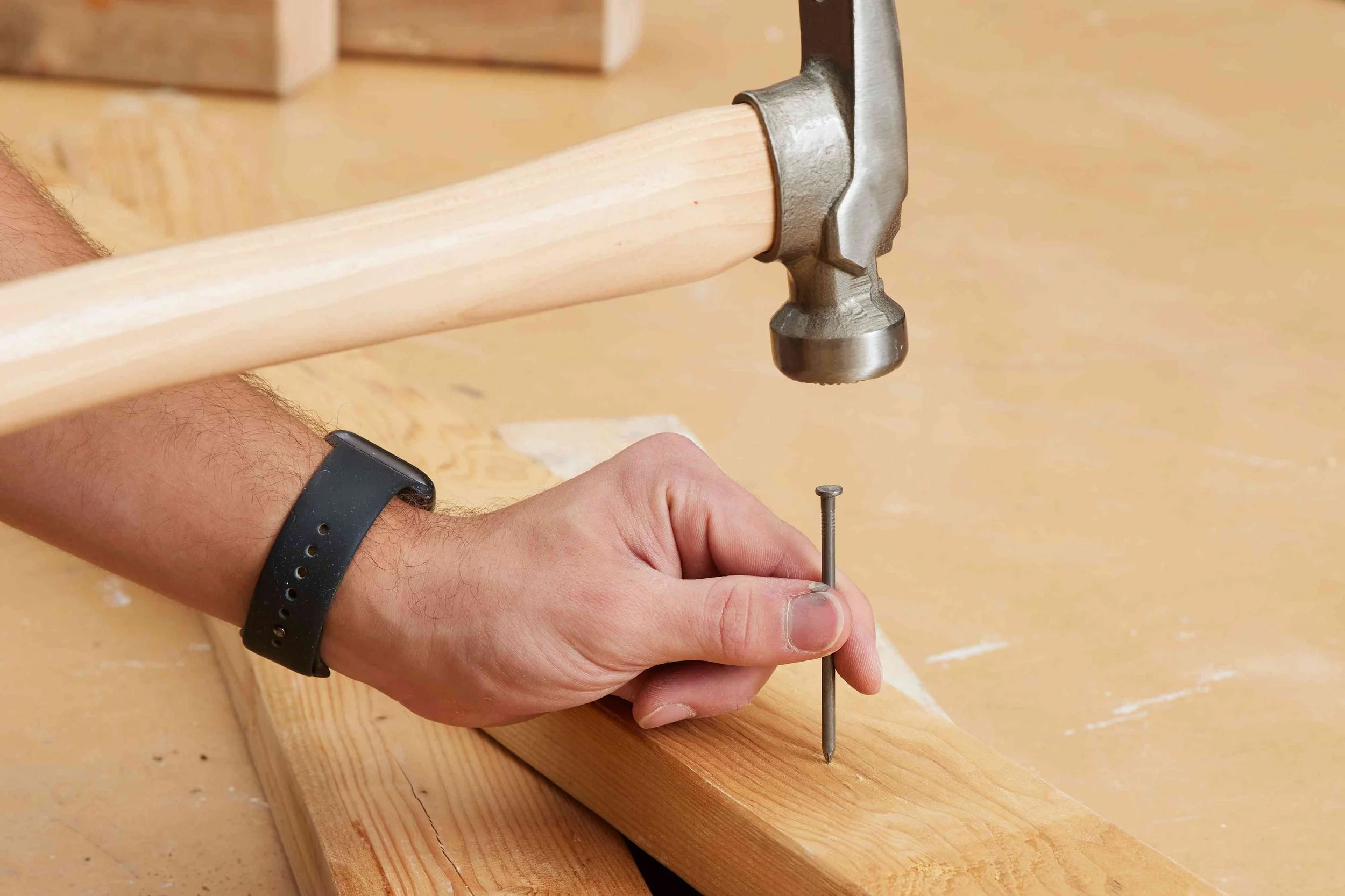
When all you have is a hammer
When I was in massage school, one of my teachers said something that I still think about almost 25 years later: "When all you have is a hammer, every problem looks like a nail."
And it's so true. Talk to almost any specialist and they'll find the answer to your problem inside their specialty. That's not because they're bad at what they do. It's what they've been trained to look for, and it's what they've seen work over and over again. So of course that's what they see.
But the more you learn about the body and mind and healing, the more nuance you’ll see. We are all so incredibly different. Our genetics are different, our diets are different, and we have different traumas, different parents, different cultures and different exposures. There's so much that's unique about each of us — not only in who we are, but in the environment we live in.
Each one of us is our own ecosystem. And so often we're trying to do what worked for someone who’s living in a completely different one.
Why my garden will never look like hers
I love watching gardening videos. I don't really watch TV, but there's one creator on YouTube I follow, Garden Answer, and I never miss one of her daily vlogs. I've learned so much about gardening from her. Plus her videos are just so relaxing.
And even though she only lives a couple hours away from me, she's gardening in a completely different climate. She lives in the high desert, where they get very little rain and have really hot summers with really hot sun beating down on all the plants. I live in a temperate climate with loads of rain and a shorter growing season. We have lots of gray days, and it doesn't get very hot.
Her garden is a total dream. But if I tried to grow all of the same things she does, my garden wouldn't look like hers. The plants that thrive in her climate would struggle in mine, and a lot of the plants that love all my rain and gray days would struggle in hers.
That doesn't mean her plants are bad, or that she's doing it wrong, or that I'm a terrible gardener. We're just growing in really different conditions.
In a lot of ways, our ecosystems as humans can be just as different. What helps one person feel amazing can make another person feel worse. That's not because the thing is bad, or because the person who loves it is lying about it helping them. It's because we're different, and we often need different things.
And sometimes the timing matters as much as the thing itself. A tool that helps a rested, calm body can feel like way too much to a nervous system that's already on high alert. So something that didn't work for you a year ago might work for you now, and the opposite can be true too.
I really believe this is a big part of why there's so much overwhelm right now. There are so many solutions being shared as THE solution, when really it was just what worked for them.
So how do you sort through all the conflicting health advice?
How do you get through all the noise? How do you know what will work for you? And how do you know who to trust?
Part of it is just going to be trial and error. I wish I had a tidier answer for you, but that's the honest one. Something may or may not work for you, and it can still be worth trying to find out. And if it doesn't work, that doesn't mean you did something wrong. It just tells you a little more about what your body needs.
But there is a way to make trial and error a lot less overwhelming. Try one thing at a time, and give it long enough to actually tell. If you start five new things on the same Monday and feel better (or worse) two weeks later, you have no idea which one did it. One thing at a time is how you actually learn what your body responds to.
The other part is finding the right people to trust. And here's one of the biggest things I look for: do they speak in absolutes?
We often want the people we go to to sound really confident in what they're talking about. It feels reassuring when someone says, "This is the answer." But the real experts usually don't speak in absolutes, because they have enough experience to know that bodies don't work that way. They say things like "sometimes," "might," "could," and "possibly." That doesn't always inspire a lot of faith, but it's much closer to reality.
Ideally, you find someone who teaches not only from a solid knowledge base, but also from their own experience. And if you can find someone who's been through what you've been through, someone whose ecosystem looks a lot like yours, and then learn from them, that's what ends up saving you so much time and frustration in the process.
Think of it like a menu
There's one more thing that has taken so much of the overwhelm out of this for me. I like to think of all these solutions as items on a menu. The goal is not to use them all, it's to choose the right one for the right moment.
I have a lot of things on my menu. But I don't use all of them every day. Some things are non-negotiable, like movement and sleep. Others are just for when I need them, like a specific supplement, a breathing technique or another tool I love.
There are some things that belong on everyone's menu: sleep, light, movement, food, the basics every body needs. Those are the foundation. Where we really differ is in the specifics, plus in everything that comes after: the supplements, the protocols, the specific tools. But when the foundation is in place, it gets so much easier to tell which of those extras actually help you.
Let me give you an example of how I use my menu:
Some mornings I have two hours to ease into my day. I make my tea, I sit and do my study, I go for a walk, I sit outside and listen to the birds, I do my stretches and some red light therapy, and then I start my work day. And it's lovely. But that's not realistic every day.
Other days, the best I can do is get ready, do my 100 jumps, spend five minutes on a positive thought for the day, and then I'm off.
In both cases I used different parts of my menu, and different amounts of it. The point was that I used something.
That shift in focus helped me so much with that overwhelmed feeling. I don't need to do all the things all the time. And I don't need everything I do to be the hammer that fixes all my problems. Sometimes you need a wrench. And sometimes you need a hacksaw. (I don't actually know what that is haha.)
Something to sit with
If you're tired of all the advice and you still don't feel okay, I want you to know there's nothing wrong with you. What works for someone else isn't a verdict on you. You're not meant to do everything. You're meant to find what grows in your own climate, and to use what you need for today.
A few questions to ask yourself this week:
What's been working for me, even if it's small?
What have I kept doing because it worked for someone else, even though it isn't working for me?
What's on my menu, and what do I need from it today?