


The clocks turn back this Saturday night, which means the days are going to feel a lot shorter. And for some people, that's when their downward spiral starts.
I have a good friend who struggles with their mental health in general, but once the dark days start, they really struggle. Their motivation goes way down, their energy drops, they struggle with dark thoughts, and there's just this heaviness that settles over everything. Every year I can see it coming. And sometimes the dread of it starting is almost as hard as the season itself.
If you live somewhere with long, dark winters, you probably know some version of this. Here in the Pacific Northwest we call it The Big Dark. It's dark when you wake up, it's dark again before dinner is on the table, and it lasts for months. For a lot of people, this is the time of year when the winter blues start creeping in.
I used to struggle through this season too. Fall has always energized me, but winter was sometimes tougher. We have a lot of gray days here and that can wear on you after a while. I'd find myself losing motivation, and then I'd get so frustrated with myself because I couldn't keep up the same high energy I had the rest of the year.
But now I actually look forward to winter.
Two things changed for me:
I changed what I expected from my body during this time of year
I learned how I could actually support it.
And that's what I want to share with you today.
The story you tell yourself about winter
Years ago, a psychologist named Kari Leibowitz moved to Tromsø, Norway, a town so far north that the sun never actually comes up over the horizon for about two months every winter. She went expecting to study how people get through all that darkness. What she found instead was a lot of people who genuinely enjoyed it. To them, winter was cozy and beautiful, and something to look forward to.
So she and a colleague started measuring what they called a "wintertime mindset," which is really just how a person thinks about winter. And people with a more positive wintertime mindset reported greater well-being. You could experience the same darkness and the same cold, but everything changes when you have a different story about what it means.
I love this so much, because it's exactly what happened for me. I used to treat winter like something to push through until spring. I expected my body to run at the same pace in December that it did in June, and when it didn't, I interpreted it as something being wrong with me. Once I started seeing winter as its own season, with its own purpose, things started to shift.
Your nervous system is always listening to the story you're telling it. If winter is associated with dread in your mind, your body braces for it before it even gets here. But if winter means slowing down, cozy nights and a little more rest, now your body is able to enjoy it instead.
So first, check your mindset. Are you dreading the darker days? Or can you change how you see them? It’s amazing how much this one change can impact.
But on top of mindset, there are some practical things you can do to support your body this time of year. Don’t view these as things to add to your to-do list but rather as principles to carry you through. Let’s learn to enjoy this season, instead of just surviving it.
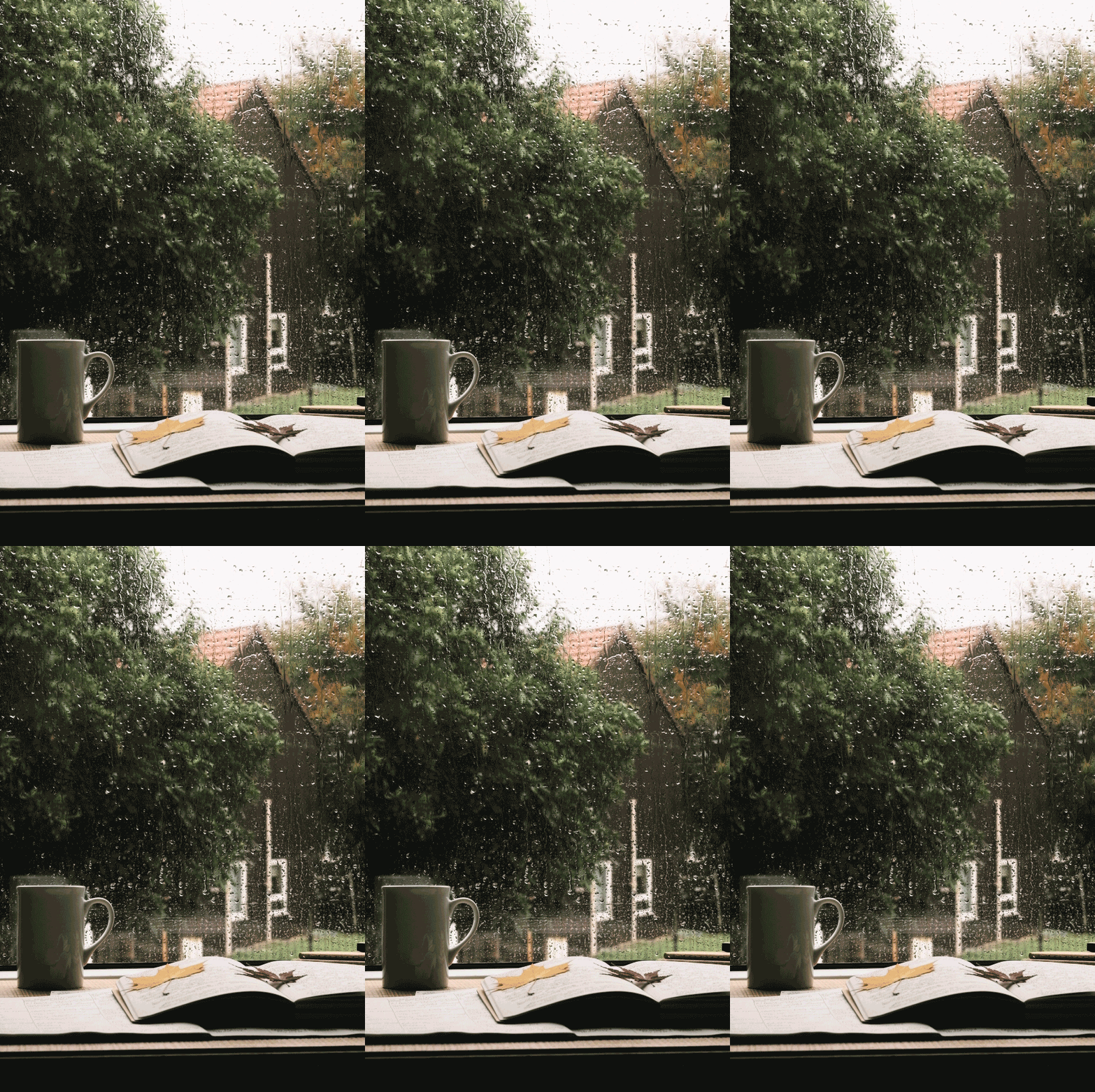
Let as much light in as you can
Light is one of the biggest signals your body uses to figure out what time it is. You have a master clock in your brain, and morning light is what tells it, "Okay, it's daytime, let's go." That one signal sets off a whole chain reaction. It helps you feel awake in the morning, and it sets the timer for when you'll start to feel sleepy that night.
When you don't get much light in the morning, that clock starts to drift .. and you end up groggy when you're supposed to be awake and wired when you're supposed to be winding down. Sound familiar?
So the more daylight you can get in your eyes, the better, and first thing in the morning is best. Step outside with your coffee, take a short walk, or even just sit by a window with the curtains wide open. And don't let the gray skies fool you. Even on a cloudy PNW day, the light outside is usually way brighter than the light inside your house.
The other thing that has made such a huge difference for me is my sunrise alarm clock. (I got mine on Amazon — here's the one I use.) Instead of an alarm jolting you awake in total darkness, the light slowly gets brighter before your alarm goes off, like a sunrise. Waking up in the dark is so hard on the body, and this makes it so much easier. Researchers at the University of Washington even found that this kind of dawn simulation made it easier for people with winter depression to wake up.
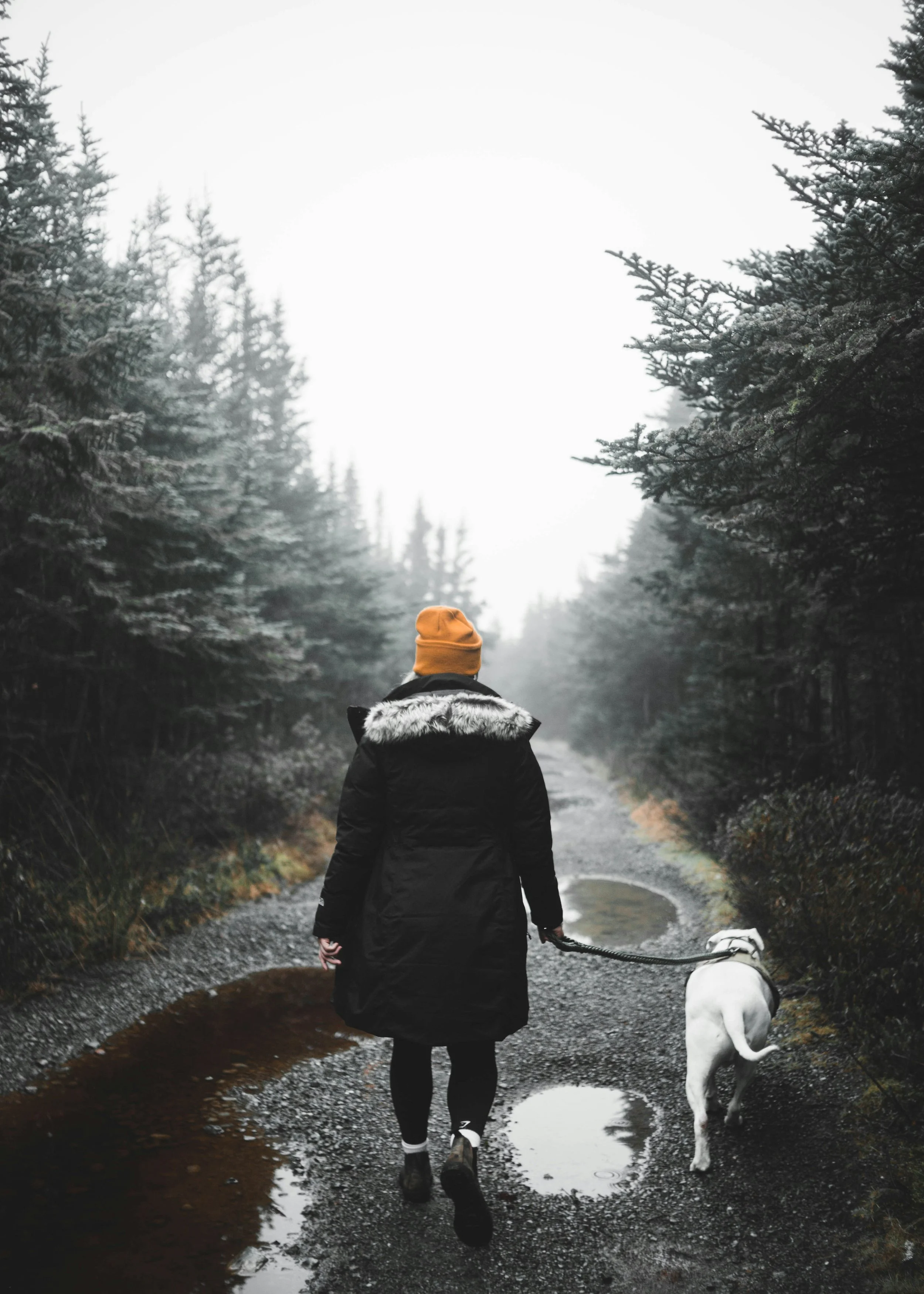
Get outside, even when it's cold
I know — when it's cold and drizzly outside, the last thing you want to do is go out in it. But hear me out.
Your nervous system reacts the strongest to what it isn't used to. So if you spend the fall bundled up inside and then step out into the first really cold day of winter, your body treats that cold like a big deal. But if you keep going outside as the temperatures slowly drop, your body gets to adjust right along with them. By the time it's really cold, it won't feel nearly as bad.
There's research on this too. In one study, people who spent time in mild cold every day for just 10 days started to feel more comfortable in the cold. They felt like the room was warmer than before, and they shivered less.
If you've been doing cold showers with us in my free community this month, you've already been practicing this. It's the same lesson: a little discomfort, in a dose your body can handle, teaches your nervous system that it's safe. So start now. Take a short walk, sit outside for a few minutes, let yourself feel the chill, and then go back inside and get cozy.
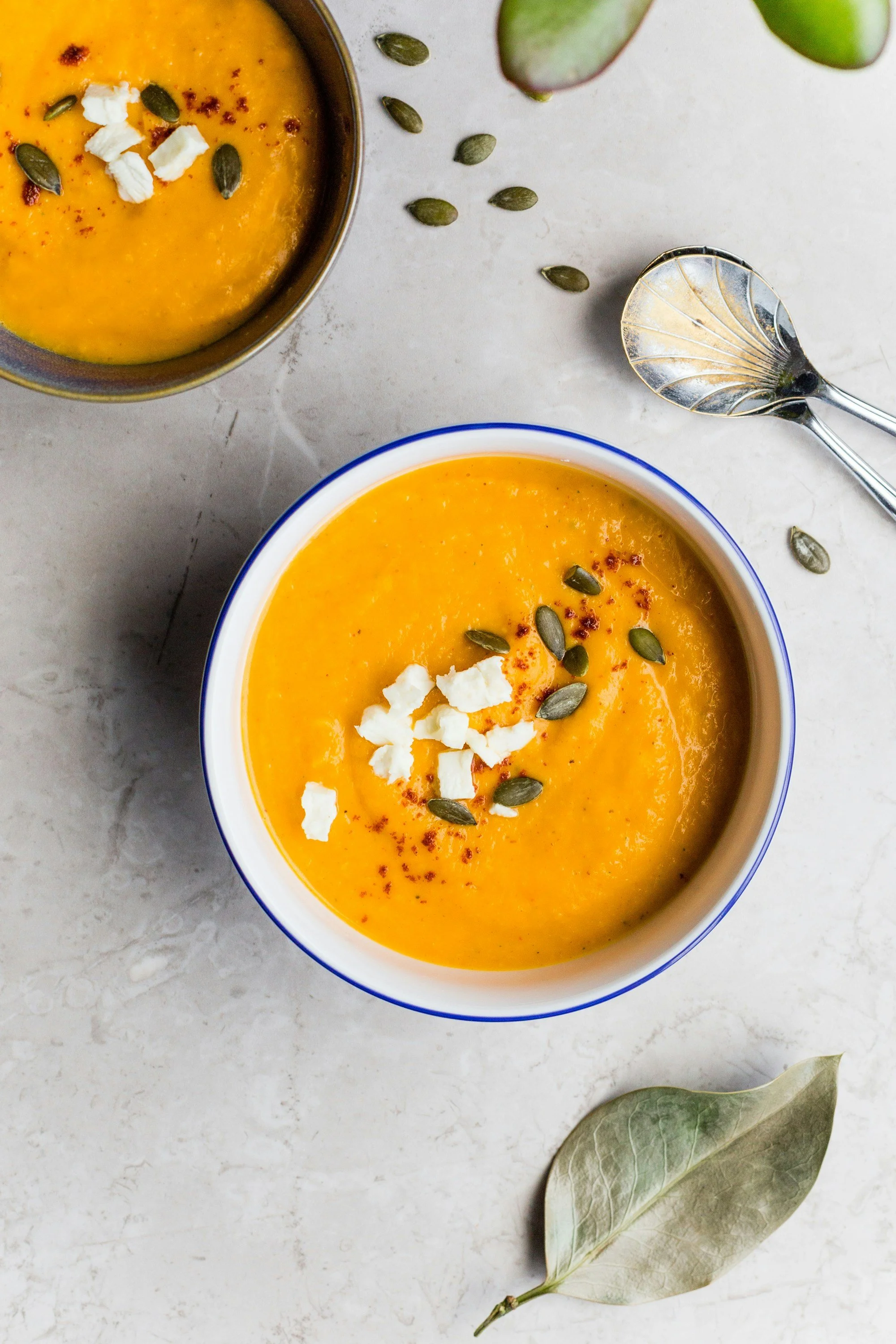
Eat with the seasons
I love this one, because nature's timing is so fascinating to me. In-season foods seem to have exactly the nutrients we need this time of year.
Winter is when citrus is at its best — oranges, grapefruit, clementines — along with kiwi, broccoli and Brussels sprouts. All of those are packed with vitamin C, which is great support for your immune system during cold and flu season. Then you have squash, sweet potatoes and carrots, which are full of beta-carotene (your body turns it into vitamin A). And all of those root veggies and winter greens give you lots of fiber, which your gut loves.
So if you want something simple to focus on this season, it's those three: vitamin C, beta-carotene and fiber.
This is also the time of year for warm, nourishing foods. Soups, stews, roasted veggies, a big pot of something simmering on the stove… it's comforting for a reason. In Chinese medicine, winter is the season for warm, cooked foods, since the thinking is that your body is conserving its energy and shouldn't have to work so hard to stay warm.
One of my favorites this time of year is this creamy sweet potato sausage soup. It's warm and filling, and it checks a lot of those boxes all at once.
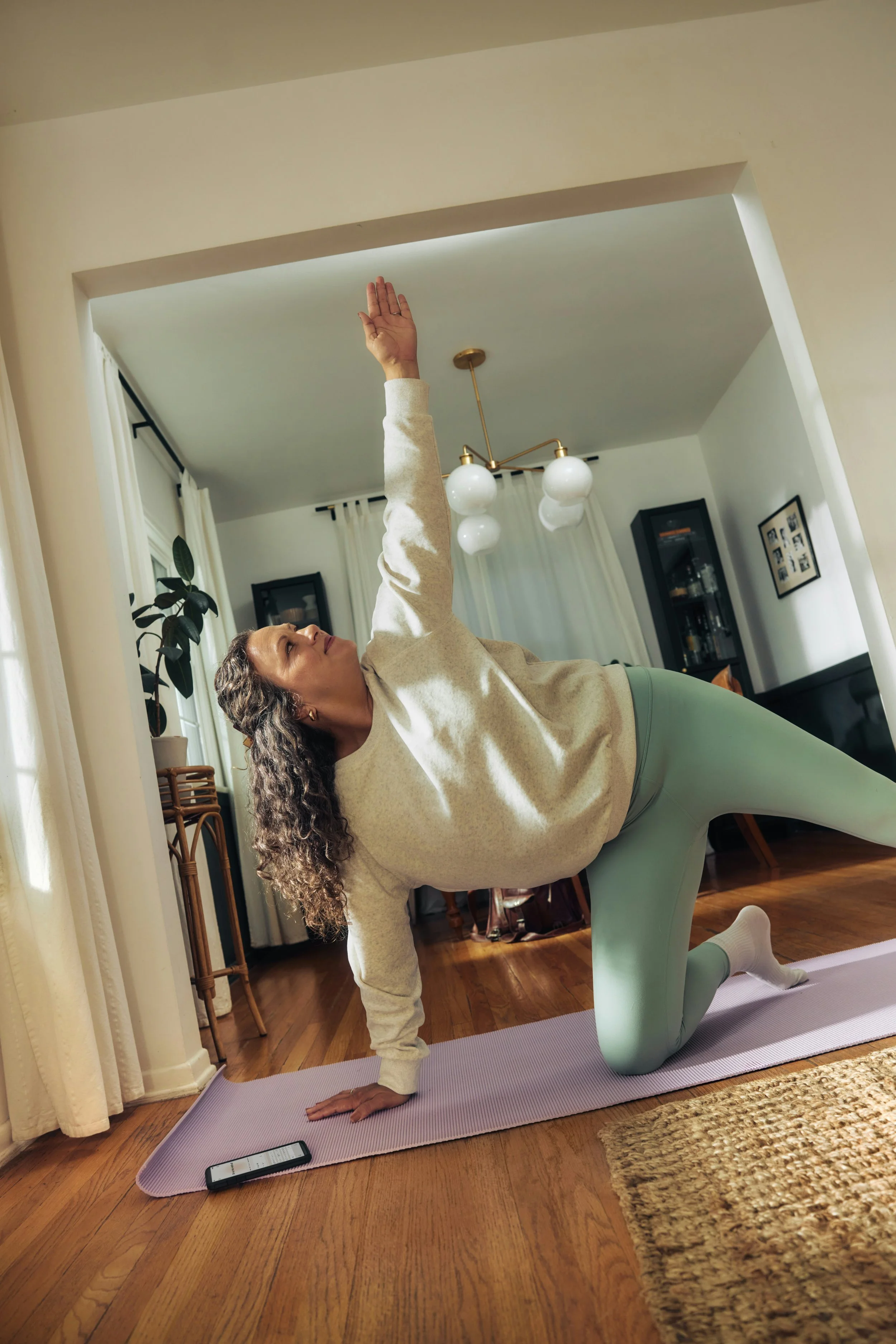
Keep moving, gently
Exercise does SO much for our mental health. In one study, after 16 weeks, exercise was just as effective as an antidepressant for adults over 50 with major depression. And a large review of 218 studies found that walking, yoga and strength training all helped reduce depression. (If you're taking medication, this isn't a reason to stop. Movement can work right alongside whatever support you already have.)
And it doesn't take much. You don't need an intense workout plan or an hour at the gym. Gentle movement counts. A walk around the block, some stretching, putting on a song and moving your body in the kitchen… it all adds up.
This is exactly why my community and I are doing 100 jumps every morning all through November, starting this Sunday. It takes about a minute, it wakes your whole body up (I honestly think it works better than caffeine), and it's a tiny way to keep moving when everything in you wants to stay under a blanket. If you'd like to do it with us, Come join us here for free.

Give yourself permission to slow down
This is the one I wish someone had told me years ago.
Look around outside right now. The trees are dropping their leaves, plants are pulling their energy down into their roots, and animals are slowing down and storing up for the cold months. Nature isn't trying to keep the same pace it had in May, so why do we expect that from ourselves?
It's not natural for our bodies to push the way we do through these months. And there may even be some biology behind it. One small sleep study found that people got about 30 more minutes of REM sleep in the winter than in the spring. More research is needed, but it makes so much sense to me.
In Chinese medicine, winter is the season of rest and storage — a time to go to bed earlier, wake with the light, and save up your energy for spring. I love that.
Here's what that looks like for me now. I let myself have more sleep, more down time and more time outside. I still have my schedule, but everything is just a little bit slower. And I don't get frustrated with myself for it anymore, because I know my body isn't failing me. It's doing exactly what it's designed to do this time of year.
This is a season made for reflecting, resting and getting cozy. Light a candle, curl up with a good book, make plans to walk with a friend. Let yourself enjoy it.
A little extra support
Supplements can be a helpful extra layer of support during the colder months too. Vitamin D, vitamin C and omega-3s are three that can be really helpful this time of year. (Vitamin D especially, since we get so little sun in the winter here.) Talk with your provider about what's right for you, and it's worth asking to have your vitamin D levels checked.
When it's more than the winter blues
I want to be really clear about one thing: Everything in this post is about supporting your body through a harder season. But sometimes what you're feeling is more than the winter blues. If you've lost interest in things you usually love, if the heaviness hasn't lifted for weeks, or if you're struggling to get through your days, please reach out to a provider. Seasonal depression is real, and there's real help for it. Check with your provider to see what options you have available to you.
Something to sit with
If you tend to dread this time of year, I get it. I was there for a long time. But what if this year it could feel a little different?
A few questions to ask yourself this week:
What story have I been telling myself about winter?
What would it look like to let this season be a little slower?
What's one thing I could look forward to this winter?
You don't have to love every dark, rainy day. But when you stop fighting the season and start supporting your body through it, winter can become something you actually get to enjoy.
This post is for education and isn't a substitute for care from a medical or mental health provider. If you're struggling with your mood this season, working alongside a licensed professional can be invaluable.
A quick note on cold: if you have a heart condition, are pregnant, have Raynaud's, or have any other health concerns, check with your doctor before adding more cold exposure.
This post contains an affiliate link. If you buy through it, I may earn a small commission at no extra cost to you.